Day 4 — Accessible Version
Words That De-Escalate
Logic doesn't work when her rational brain is offline. The BIFF method — Brief, Informative, Firm, Friendly — gives you words that don't add fuel to the fire.
Part 1 of 2: Words That De-Escalate
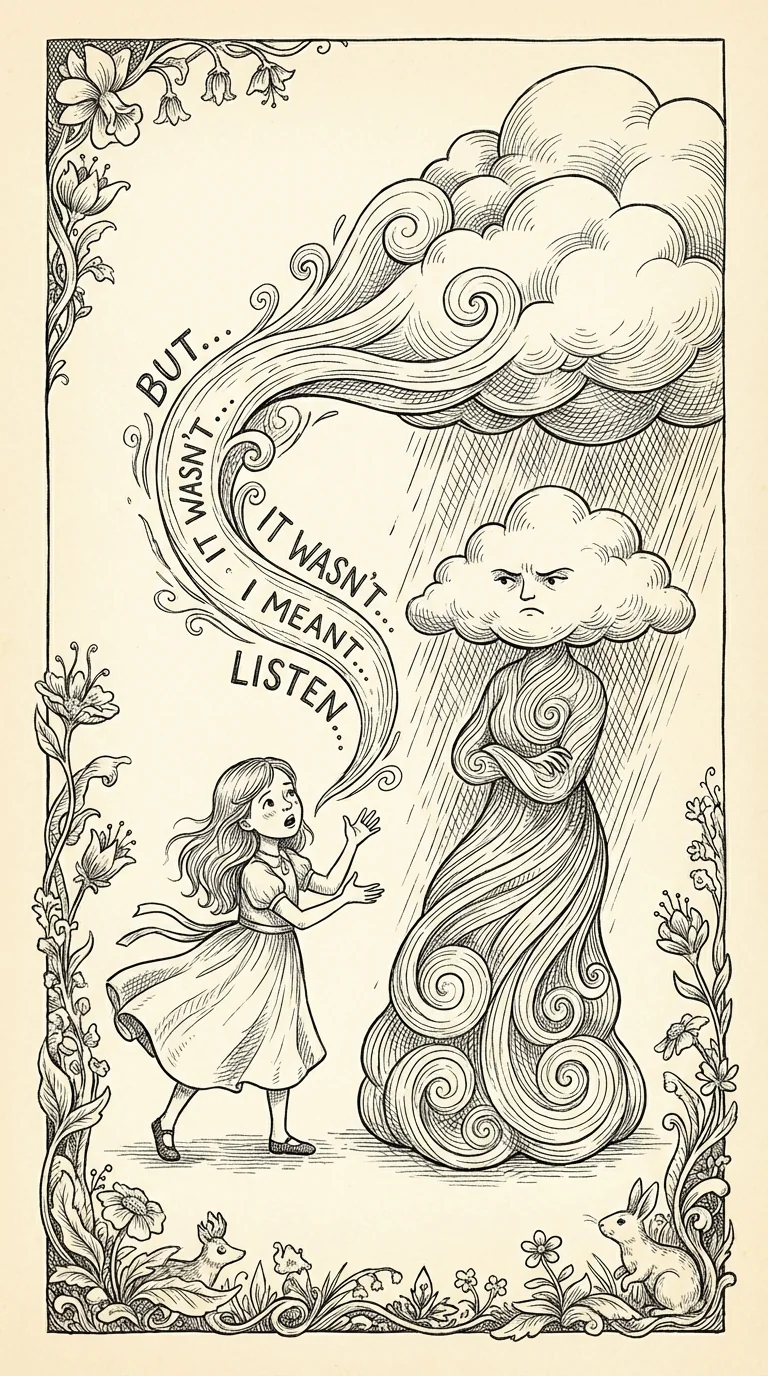
You've tried explaining yourself. Defending with logic. Pointing out how unfair she's being. It always makes things worse. Why?
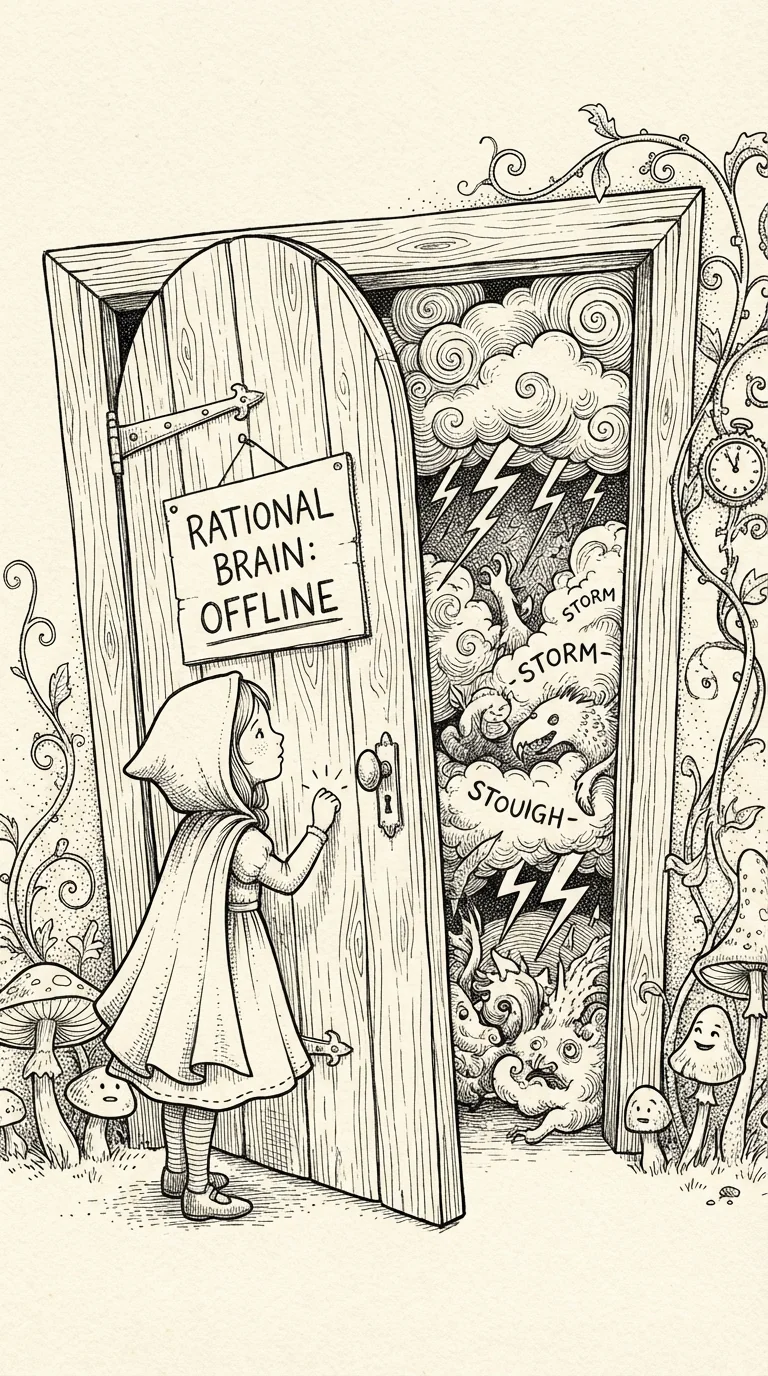
When she's dysregulated, her rational brain is offline. Logic doesn't reach her. More words give her more material to argue with.

Enter BIFF: Brief, Informative, Firm, and Friendly. Four principles that keep you protected without adding fuel to the fire.

Brief means 1-2 sentences maximum. Informative means one neutral fact. Firm means no over-explaining. Friendly means no sarcasm.
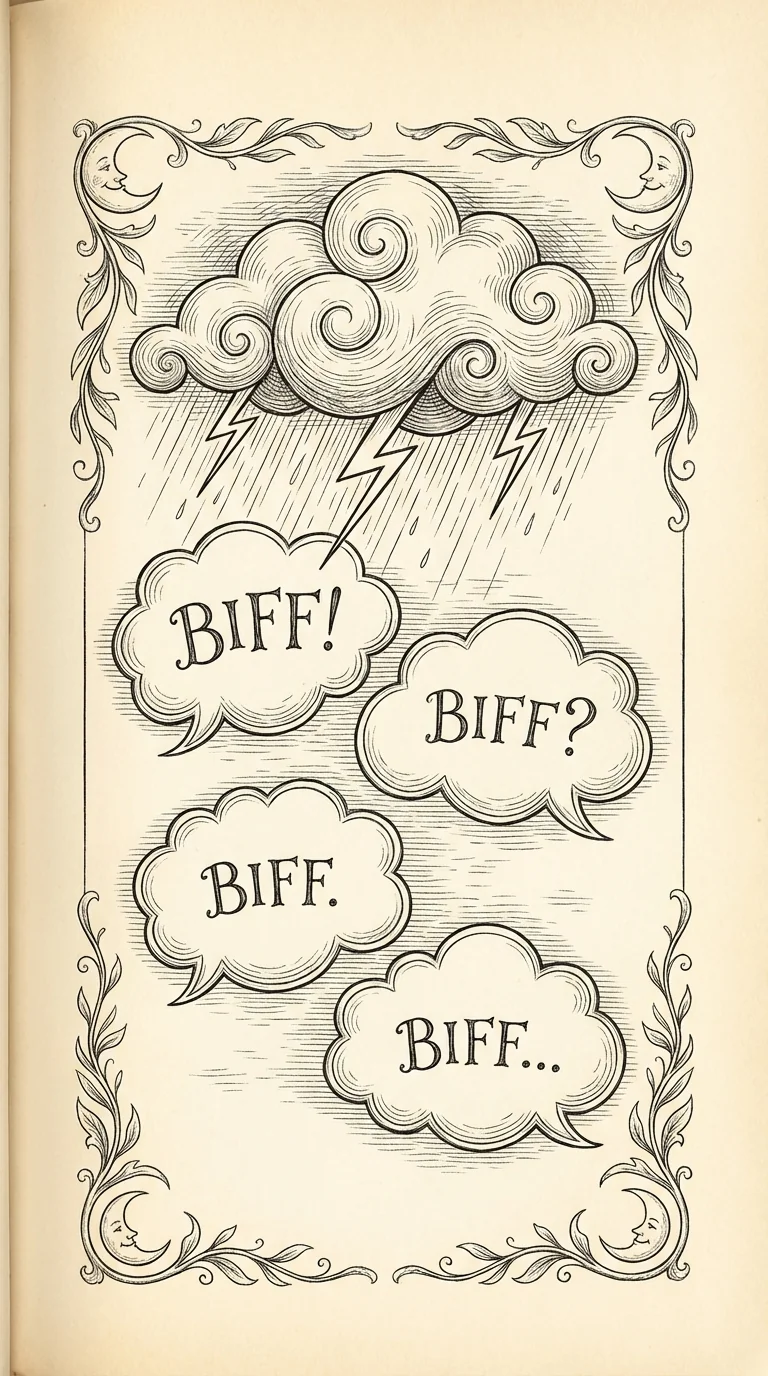
BIFF examples: 'I hear you. I'll take care of it.' or 'Okay.' Just that. Watch what happens when you remove the fuel.

BIFF isn't giving up. It's choosing your battles wisely—saving your energy for what actually matters. Tomorrow: the exit.
Part 2 of 2: The BIFF Method

Knowing BIFF and using BIFF in the heat of the moment are two different skills. Today you practice.

Before you can use BIFF, you need to recognize the moment it's needed: when logic isn't landing and she's escalating.

In that moment, your job is not to win the argument. Your job is to not make it worse. BIFF is your off-ramp.

Take a recent scenario and rewrite your response using BIFF. Long, defensive reply → two quiet sentences. Notice the difference.
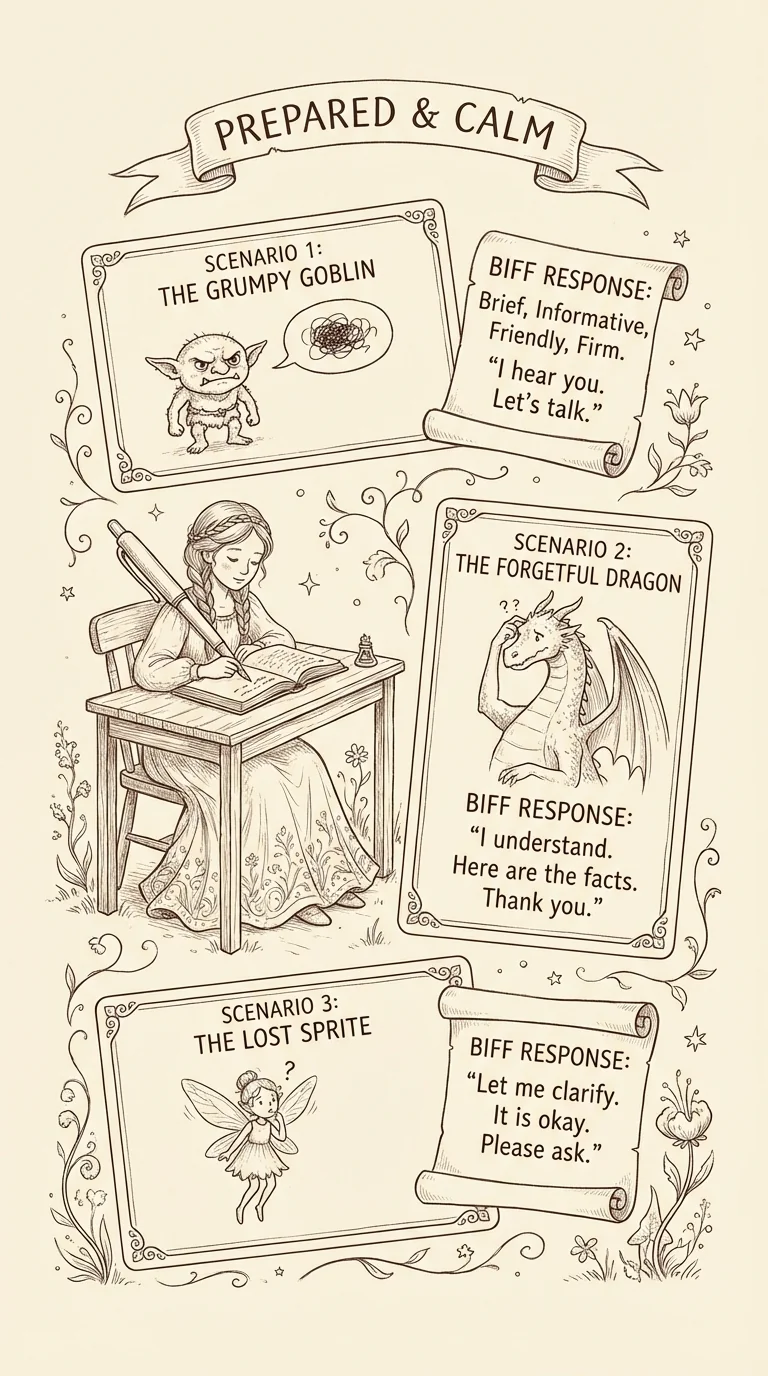
Practice BIFF responses today—write three for likely scenarios. Having them ready means you won't scramble in the moment.

You're speaking differently now. The shield carries the word you learned — BIFF — carved clean and firm.